From garage to office: What airbrushing taught me about graphic design
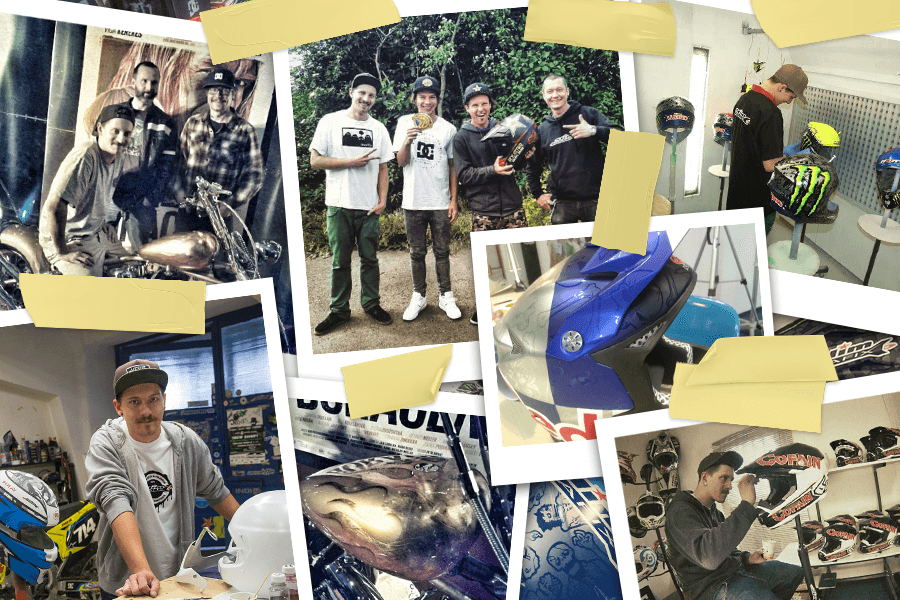
Before I sat down to my first agency brief and started putting together layouts for a client, I was holding an airbrush rather than a mouse. Instead of budgets and presentations, I was working on templates for carbon bicycles, sanding motorcycle tanks, or discussing with my boss where to place the Red Bull logo on a helmet to ensure it looked good even at 200 km/h. I was doing airbrush for an extreme world – a world of noise, speed, and adrenaline. And even though I now work at a creative agency where everything is more polished, many principles from that time have stayed with me. Perhaps it is precisely because of them that I create better designs today. This article is about what I gained from working in a garage, and why it is still useful for me at the computer in the agency.
Design that has to withstand something
When you do airbrush on a motorcycle or helmet, it’s not enough for it to look good in photos. It has to look good even after the race, when the whole body is covered in mud, the helmet is scratched, and the hood is stressed by wind pressure. The design just has to last, both physically and visually. When creating a banner or a visual for social media, I think the same way: – will it work in the feed among other ads? – won’t it be overloaded? – what happens when someone crops it or pulls it into another format? Airbrushing taught me that a visual shouldn’t just be nice, but also functional, clear, and should leave an impression even in challenging conditions. Now I deal with algorithms and competitors' ads instead of mud and rain.
Every millimeter counts
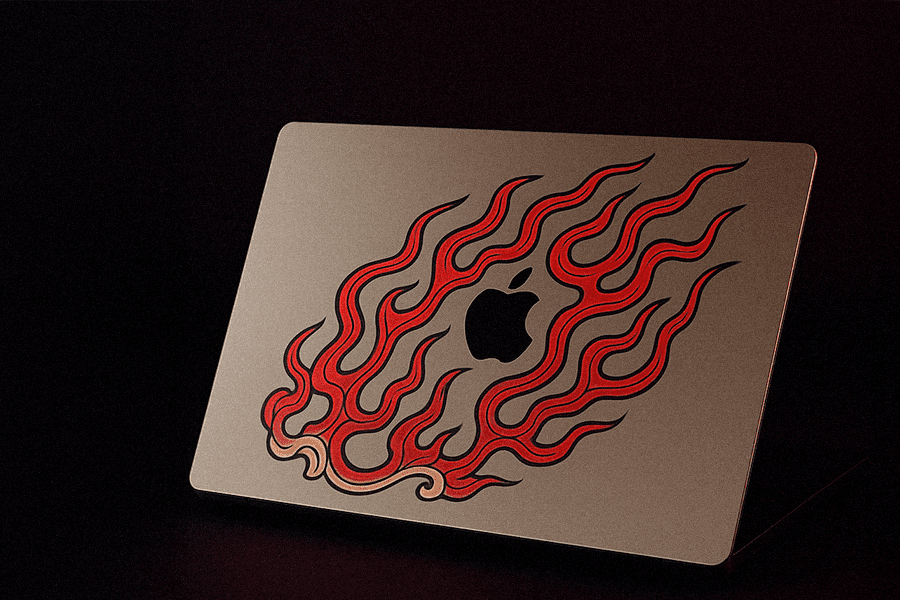
In airbrushing, you have no room for error. There’s no Ctrl+z here. Making a wrong stroke often means sanding again, repainting, and layering again. And that hurts – in time, financially, and mentally. It teaches you to think about every stroke beforehand. I’ve transferred this approach to graphic design as well. When I’m laying out a visual, I’m not the type to "try and see how it turns out." I don’t measure, I don’t test, I don’t shift it by half a pixel until it works… Not because I’m not meticulous, but because I know what a millimeter does. I know that being slightly off means a different dynamics. That a slightly larger gap can disrupt the balance of the entire layout. Airbrushing taught me respect for space. Whether you're spraying flames on the side of a motorcycle or composing typography for a corporate banner, it’s always about the same thing: every millimeter has its weight.
The client is not an obstacle, but part of the project
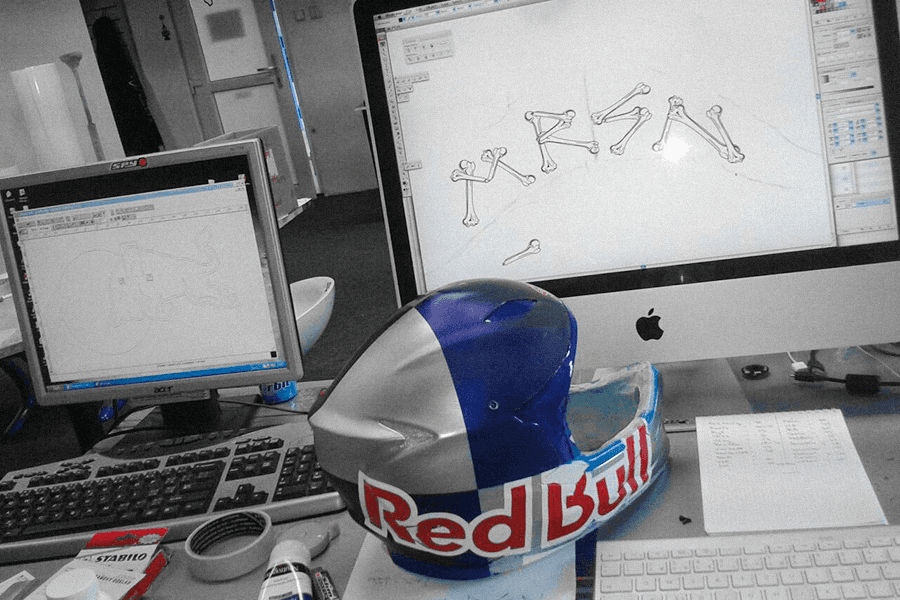
When I worked under the wings of Petr "Šimi" Šimák from SlimGrafix for brands like Monster Energy or Red Bull, I had to respect clear rules – colors, logos, dimensions, brand tone. At the same time, they weren’t just “contracts.” It was a collaboration. When someone is sitting on a motorcycle and their helmet has a design from your workshop, suddenly it matters how they feel while riding. This comes back to me even today when I create visuals for clients at WeBetter. Instead of a racer, there might be a brand manager or a startup founder, but the principle is the same. They are not the enemy limiting your creativity. They are someone with a story, a need, and expectations. And your job is to find the balance between what the brand wants and what you want to express as a graphic designer. Airbrushing taught me to understand visual identity as trust. And that when you respect the client, you have a much greater chance of creating something meaningful.
Creator vs. machine: why you should leave your mark on every piece of work
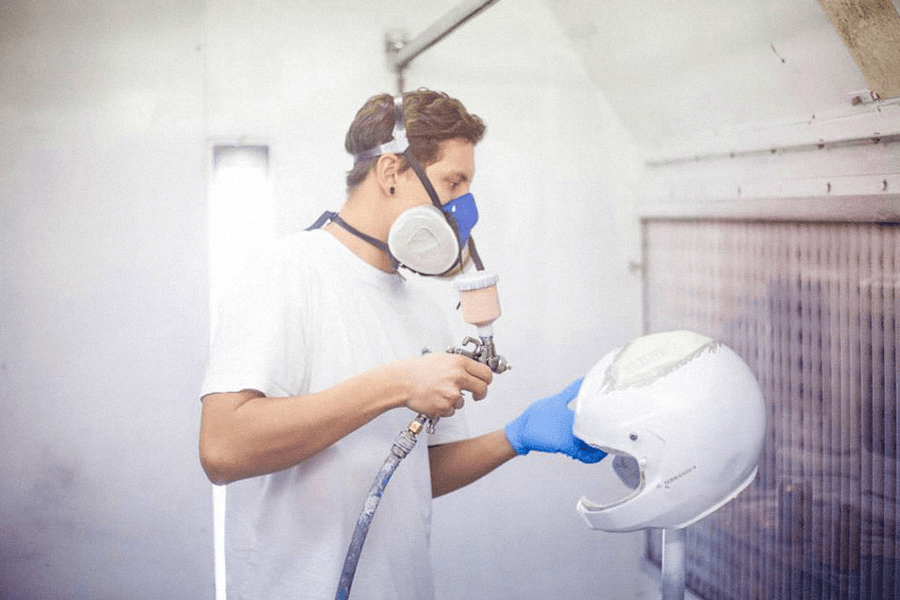
Airbrush is never truly perfect. And that's where its charm lies. Every stroke is original, every piece is unique. Even if you make two helmets with a similar design, they will never be the same. And that still reminds me today of why I started doing graphics – not for the templates, but for the creation that has personality. Today, I navigate a world where there is pressure for efficiency, automation, and a uniform visual style. Yet, I still believe that a good graphic designer should put a piece of themselves into every work – whether it's an idea, detail, color, or composition. Something that does more than just provide a functional output. Shimi taught me to be authentic, even when I am working under a brief. That’s why I strive in the office that the result shows not only the brand but also the person who created it.
From the garage to the office and back again
The journey from the garage to the office was not a leap, but a smooth transition. And even though I don't drag the hose from the compressor today, I still have that boy inside me who drew skulls on gas tanks and tried to hit the line around the screw. The design changes, but the approach remains. Whether you're making a helmet for a Red Bull rider or a visual for a LinkedIn client, it’s always about the same thing – to understand what needs to be created, why it needs to be created, and to give it a piece of yourself. And if you’re a graphic designer and feel like you’re lacking energy? Feel free to return back to the "garage". The place where you started. The place where you created because you enjoyed it. Maybe you'll find exactly what you’re missing today.